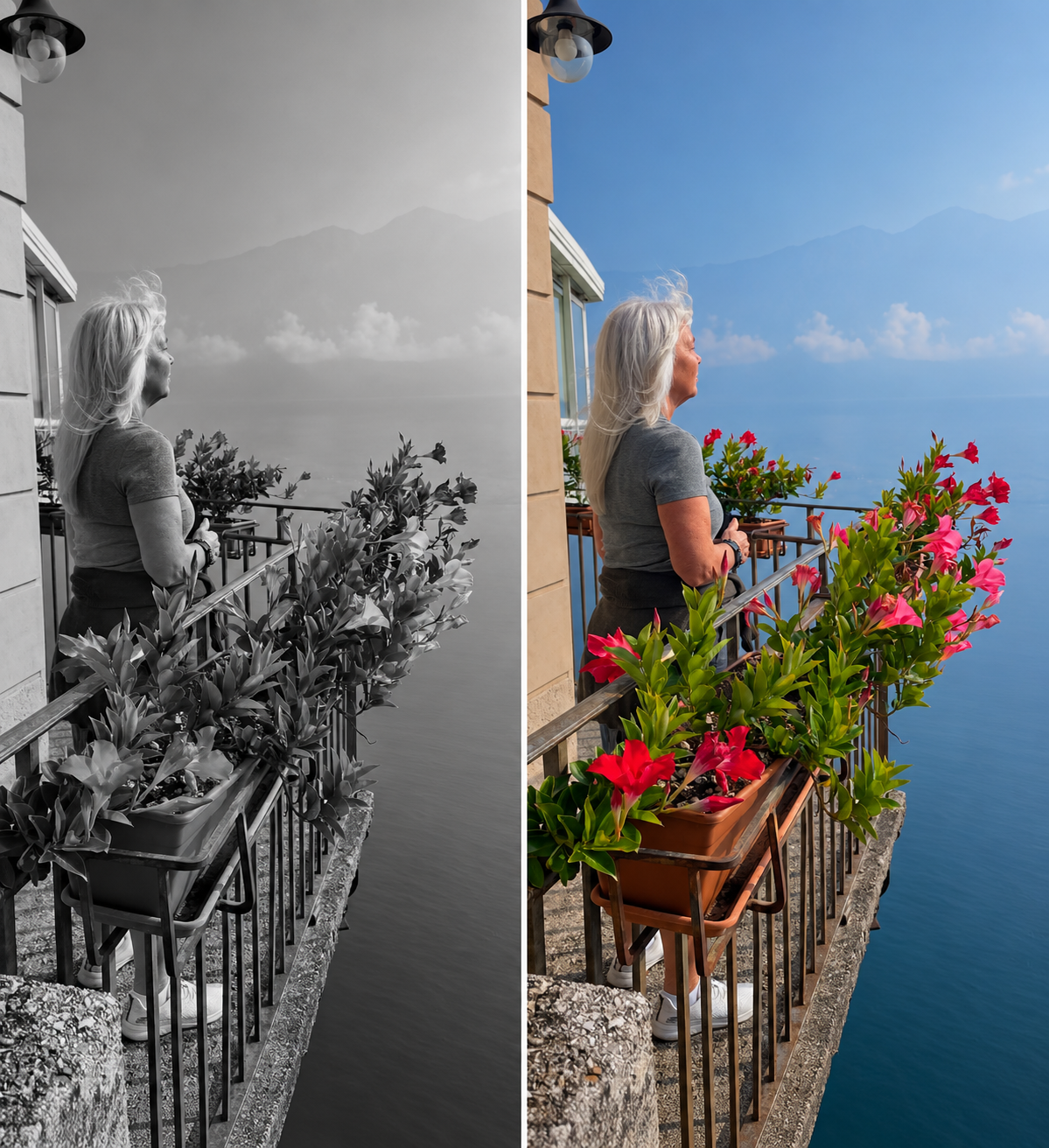
Have you noticed how differently life can feel depending on your emotional state?
One day, you feel calm, happy, and hopeful. You see possibilities, appreciate the people around you, and feel that most things are manageable.
Another day, that very same life can feel heavy and full of problems. Your partner is being difficult, a friend hasn't been in touch, a colleague gives you a strange look, and suddenly it feels as though nothing is going quite right.
It's as if life has gone from full color to black and white.
I often describe this as finding ourselves at the bottom of our own crater. Down there, our view is limited. We mainly see what's difficult, what's missing, and what could go wrong. And that's actually very human.
Our brain is more interested in keeping us alive than in making us happy.
When we feel criticized, rejected, lonely, or misunderstood, our internal alarm system can become activated. Our nervous system goes into overdrive, and we become increasingly alert to anything that might be threatening.
From the bottom of the crater, the world can look much darker than it actually is.
And that's when we begin telling ourselves stories.
We humans are remarkable storytellers. We constantly try to make sense of our experiences by creating meaning and connections. But the stories we tell ourselves aren't always true, especially when we're afraid, angry, sad, or feeling alone.
Our thoughts might sound something like this:
I'm all alone. Nobody understands me. I'm always treated unfairly. I have to handle everything on my own. My partner, friend, or boss doesn't care about me. I need to set firmer boundaries. Nobody appreciates what I do. Things will never get better.
Do any of these sound familiar?
What's fascinating is that these statements often feel like facts rather than thoughts. And the more we repeat them, the stronger our emotions can become.
We also begin searching for evidence that confirms our stories. It's almost like creating little conspiracy theories inside our own minds. We notice what supports what we already believe while overlooking anything that might offer a different perspective.
Of course, this doesn't mean that our experiences are always wrong. Sometimes we really are treated unfairly, need to establish boundaries, or make changes in our lives.
But there's a big difference between something feeling true and actually understanding the whole truth.
That's why I find the image of the crater so helpful.
When we're at the bottom, we often try to solve our problems from that very place. We criticize, argue, withdraw, make demands, or attempt to set boundaries.
But when our nervous system is in a defensive state, what we experience as clarity may actually be coming from fear and frustration. And in doing so, we risk creating even more of the very things we're trying to escape.
We simply need to learn how to build a ladder out of the crater.
This is something we work with extensively in our educational programs and in my sessions with individuals and couples.
Through understanding the brain, emotions, and relationships, combined with practical tools and exercises, we can learn to calm our sometimes racing nervous system and begin observing our own reactions with greater curiosity.
*
What's happening inside me right now? What story am I telling myself? Do I actually know it's true? What am I really afraid of? And what am I longing for*?
When we begin asking ourselves these questions, something fascinating happens.
We become better able to take ourselves seriously without attacking others or withdrawing.
We can understand our own needs more clearly, give ourselves more of what we need, and express our longings in ways that make it easier for others to understand us.
And the beautiful thing is that nothing around us necessarily has to change.
Our partner may still be difficult. Our friend still hasn't called. And life still presents its challenges.
But now we have access to a bigger picture.
We can begin to see more possibilities, experience greater calm, and choose how we want to respond to what happens rather than allowing our automatic reactions to take control.
This is how we develop emotional resilience. Not by avoiding life's difficulties, but by becoming better equipped to face them.
In the episode of Eva's Relationship Podcast released on November 6, 2026, I meet Jenny, who is currently taking our comprehensive online training program.
This is part one of a two-part conversation in which we explore the crater, our inner stories, and how we can learn to take ourselves seriously without getting trapped in criticism, fear, or defensiveness.
Above all, we talk about how to begin building our own ladder.
Because we don't have to believe every thought we think, or react to every emotion as though it tells us the whole truth.
We can learn to pause, become curious, and discover new possibilities.
And as we climb out of the crater, we once again become more receptive to all the colors of life – joy, hope, closeness, gratitude, and love.
Life is still life. But we no longer see it only in black and white.
And the most wonderful part is that we can practice finding our way back.
In part two, released on Friday, November 13, 2026, Jenny and I continue our conversation, exploring more deeply how we can strengthen ourselves and create meaningful change in our lives.
How exciting!
Eva Berlander & Co